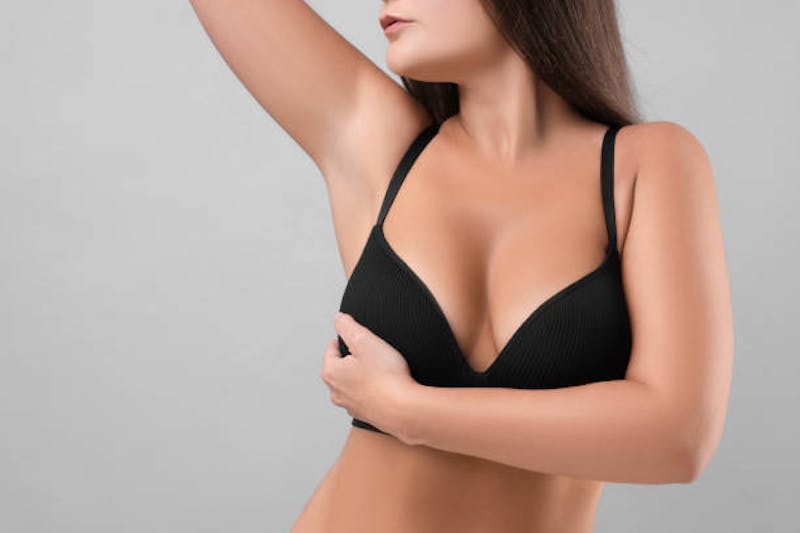
Breast implants and fat transfer are the two primary paths to breast augmentation in Toronto, and the better option depends on how much size change you want, how long you want results to last, and how much downtime you can accommodate. Implants deliver a larger, more predictable increase but require eventual replacement, while fat transfer offers a smaller, more natural-feeling change that can be permanent once the transferred fat survives. In this blog, Dr. Kunaal Jindal, a board-certified plastic surgeon who has performed more than 2,000 breast augmentations in his 13+ years of practice, breaks down how these two techniques compare so you can make an informed decision at your consultation.
What's the Difference Between Breast Implants and Fat Transfer?
Breast implants and fat transfer achieve breast augmentation through fundamentally different methods. Implants use a silicone or saline device placed under or over the chest muscle to add volume, while fat transfer harvests a patient's own fat through liposuction and reinjects it into the breast tissue.
At a glance, the two approaches differ in several key ways:
- Material used: Implants are silicone or saline devices; fat transfer uses the patient's own liposuctioned fat.
- Size increase: Implants allow for a larger, more dramatic change; fat transfer typically produces a more modest increase.
- Longevity: Implants are not designed to last a lifetime; surviving transferred fat can be permanent.
- Incisions: Implants require an incision at the breast; fat transfer adds incisions at the liposuction donor site or sites.
- Feel: Both can achieve a natural feel, though outcomes depend on technique, body type, and the surgeon's experience.
Dr. Jindal walks every patient through both options during a private breast augmentation consultation, matching the technique to the patient's anatomy and goals rather than defaulting to one method for everyone.
How Long Do Breast Implants Last Compared to Fat Transfer Results?
Breast implants are not lifetime devices, while fat transfer results can last indefinitely once the fat has survived and established a blood supply. According to the Cleveland Clinic, breast implants aren't designed to last a lifetime and are commonly replaced after roughly 10 to 15 years. This means most implant patients should plan for at least one revision surgery over their lifetime, whether due to normal wear, a change in preference, or a shift in the body over time.
Fat transfer works differently. Once transferred, fat cells survive the initial healing period, they establish their own blood supply and require no ongoing maintenance. This is one of the most common questions Dr. Jindal hears from patients weighing longevity against a larger result: implants offer size, but with a known maintenance timeline, while fat transfer offers a lower-maintenance path with a smaller change.
How Much Size Increase Can You Expect With Each Option?
Breast implants typically produce a larger, more predictable size increase than fat transfer, which usually adds about one cup size per session. According to the American Society of Plastic Surgeons, fat transfer to the breast usually adds around one cup size and may require more than one treatment session to reach a patient's desired result, whereas implants can achieve a larger, more predictable outcome in a single procedure.
For patients who want a modest, natural-looking enhancement and have enough donor fat available, fat transfer can be an appealing option, especially when combined with body contouring elsewhere. For patients seeking a more significant size change, implants generally remain the more reliable route to a specific, predictable cup size. Dr. Jindal reviews each patient's goals, available donor fat, and chest anatomy before recommending which path is likely to meet their expectations in the fewest number of procedures.
Are You a Candidate for Breast Implants or Fat Transfer?
Candidacy for either option comes down to your desired size increase, how much donor fat you have available, and your comfort with future maintenance surgery. Patients seeking a larger, more dramatic size change, or those without enough donor fat for a meaningful transfer, tend to be better suited to implants. Patients who want a subtle enhancement, prefer to avoid a foreign device, or are already considering liposuction elsewhere on the body may be excellent fat transfer candidates.
Other factors Dr. Jindal considers during a Toronto breast augmentation consultation include:
- Current breast size, shape, and skin elasticity
- Whether a breast lift is needed alongside augmentation
- Overall health and healing capacity
- Long-term goals, including future pregnancy or major weight changes
- Willingness to undergo a future implant exchange, if that path is chosen
Because these factors vary so widely from patient to patient, Dr. Jindal recommends a thorough, individualized consultation rather than choosing a technique based on trends or online research alone.
Why Choose Dr. Jindal for Breast Augmentation in Toronto?
Dr. Kunaal Jindal brings more than 13 years of experience and over 2,000 breast augmentations to every consultation, giving Toronto patients a depth of surgical experience across both implant-based and fat transfer techniques. Board-certified by the Royal College of Physicians and Surgeons of Canada, Dr. Jindal completed his medical degree at the University of Manitoba, his residency in Plastic and Reconstructive Surgery at the University of Toronto, and an advanced aesthetics fellowship in Atlanta, Georgia.
Dr. Jindal is a member of both the Canadian Society of Aesthetic Plastic Surgery and the American Society of Plastic Surgeons, reflecting an ongoing commitment to the latest techniques and safety standards in breast augmentation. That commitment to results patients can trust is reflected industry-wide: the American Society of Plastic Surgeons reports that 98% of breast augmentation patients say their results met or exceeded their expectations. Dr. Jindal's approach, pairing technical precision with an artistic eye for proportion and balance, is built to help Toronto patients land solidly within that group.
What to Expect During Recovery
Recovery differs somewhat between the two techniques, largely because fat transfer involves an additional donor site. Implant-based augmentation typically involves swelling and soreness at the chest for the first one to two weeks, with most patients returning to non-strenuous work within seven to ten days and resuming full activity by six weeks. Fat transfer patients experience a similar breast recovery timeline, plus additional bruising and tenderness at the liposuction donor sites, which usually resolves within a similar window.
In both cases, Dr. Jindal provides Toronto patients with detailed post-operative instructions covering activity restrictions, garment use, and follow-up visits to monitor healing and results.
Considering Breast Implants or Fat Transfer in Toronto? Dr. Jindal Can Help
Choosing between breast implants and fat transfer comes down to your goals for size, longevity, and recovery, and there is no single right answer for every patient. Dr. Kunaal Jindal draws on more than 2,000 breast augmentations and 13+ years of experience to help Toronto patients weigh these tradeoffs and choose the technique best suited to their anatomy and goals. Patients who already have implants and are considering replacement or another corrective procedure can also learn about breast augmentation revision. Schedule a consultation with Studio Plastic Surgery today to discuss which breast augmentation approach is right for you.
This information is provided for educational purposes only and does not replace a consultation with a board-certified plastic surgeon. Outcomes, risks, and suitability vary from patient to patient.
Sources
- Cleveland Clinic: Fat Transfer Breast Augmentation
- American Society of Plastic Surgeons: Fat Transfer for Breast Augmentation: The Ins and Outs of This Implant Alternative
- American Society of Plastic Surgeons: Breast Augmentation Patients Report High Satisfaction Rates